
Scientific team:
- Arkhipov Alexander Viktorovich
- Gabdullin Pavel Garifovich
- Nguyen Van Tu Anh
- Sun Haichao
- Smirnova Svetlana
- Liu Yuchao
- Research directions
1. Low-voltage autoelectron emission and field electron emission: Investigation of thin metal films and low-dimensional nanostructures (carbon nanoislands, graphene) as efficient emitters.
Relevance: Development of energy-efficient, stable vacuum electron sources and next-generation cold cathodes for micro- and nanoelectronics.
2. Thermoelectric effects in low-dimensional systems and nanocontacts: Study of thermoelectric power, nonlinear phonon drag of charge carriers and thermal dewetting of ultrathin films (Ni, Zr, Ag) on semiconductor substrates.
Relevance: Development of new approaches to controlling thermal fields at the nanoscale, creation of highly efficient thermoelectric converters and self-heating contact interfaces.
3. Development of analytical equipment and vacuum technologies: Design of spin-polarized detectors (including projection Mott detectors), creation of new vacuum pumping devices and hardware-software systems for physical analysis.
Relevance: Ensuring technological sovereignty in the field of precision research equipment for surface physics.
4. Nanophotonics and optical nanoantennas: Development of nanoscale radiation sources based on the effect of inelastic electron tunneling and creation of gold/silicon nanoantennas using laser printing methods.
Relevance: Development of advanced component bases for optical computers and ultra-compact integrated optoelectronics.
- Equipment used
- Ultrahigh vacuum scanning tunneling microscopes (UHV STM).
- Atomic force microscopes (AFM) for studying thermoelectric phenomena in nanocontacts and analyzing topographic structures.
- Custom experimental setups for studying low-voltage emission and the thermoelectric effect.
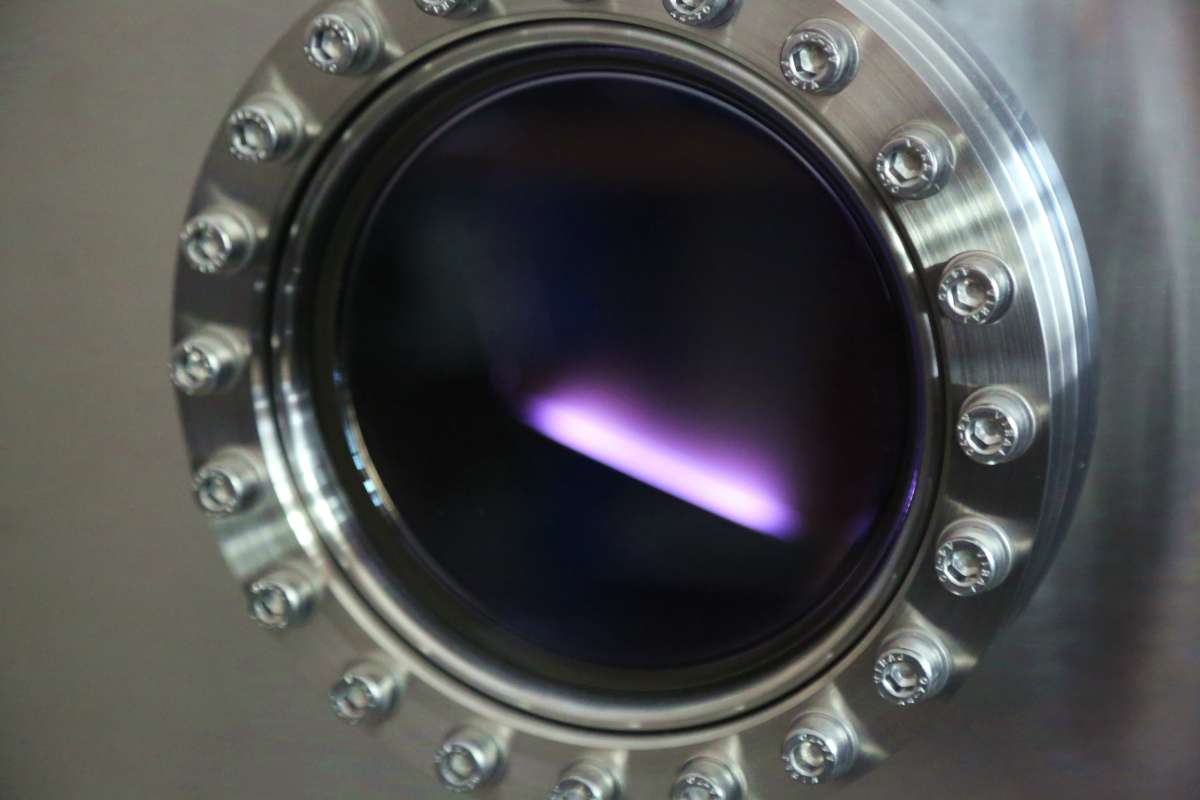
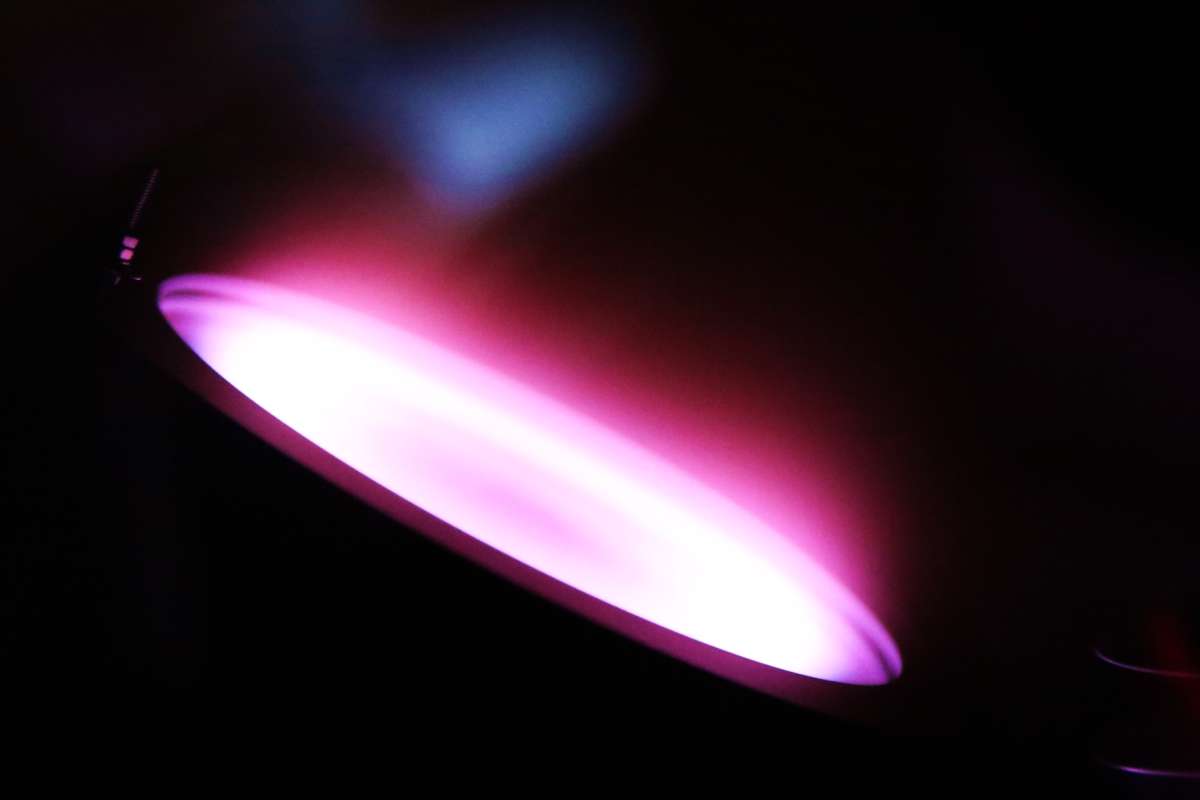
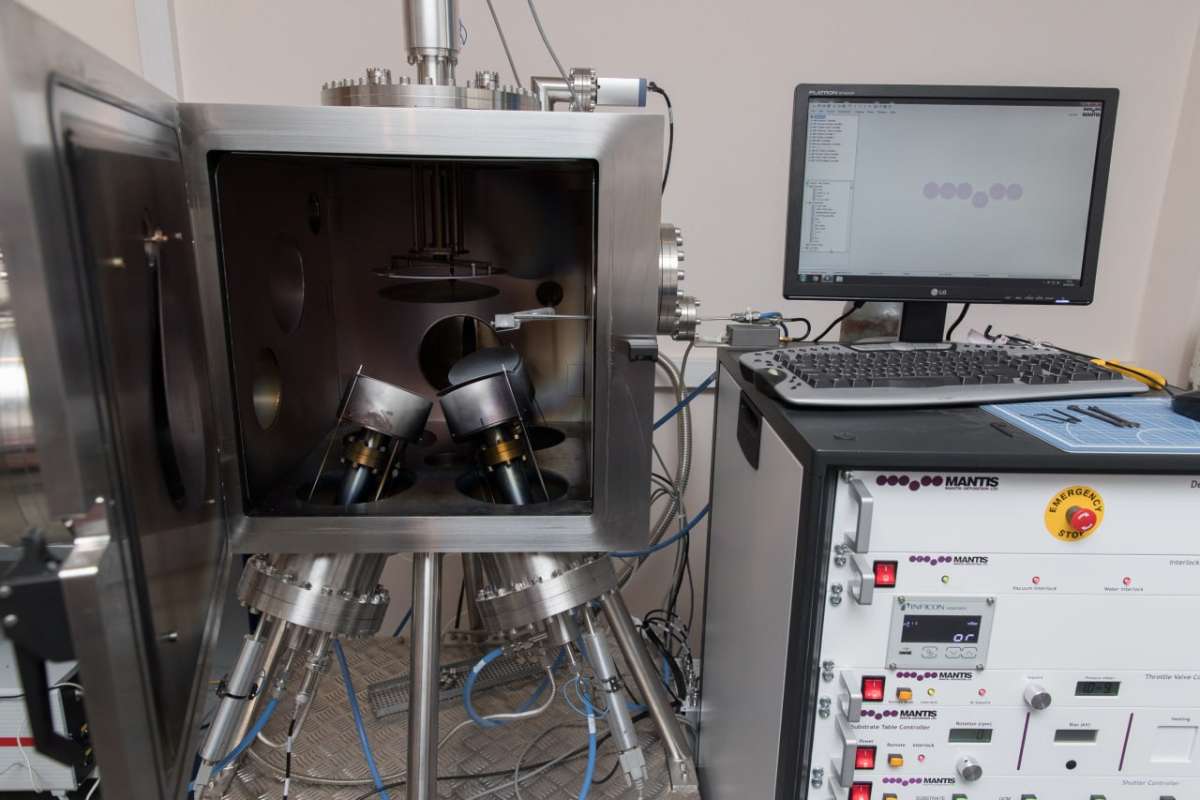
- Magnetron sputtering systems for forming multilayer metal-oxide structures.
- Femtosecond laser complexes for printing nanoantennas; ultrahigh vacuum systems with classical Mott detectors.
- Publications
- Achievements
Publication activity: Regular publication of research results in high-ranking international journals (more than 60 publications in the last 5 years), including Q1/Q2 journals such as Journal of Physical Chemistry Letters, Nanomaterials, AIP Advances, Materials Letters and Polymers.
Intellectual property (Patents): Patents for inventions have been obtained, confirming the applied significance of the developments, in particular: patent No. 2836097 "Self-heating foil for mounting electronic components" and patent No. 2797815 "Vacuum pumping device".
Software development: More than 5 computer programs have been registered for solving complex physical and hardware tasks, including systems for simulating thermal fields, calculating thermoelectric effects ("ThermoElectric Power Assistant") and automatic processing of emission current oscillograms.
- Unique setup for studying autoelectron emission and thermally stimulated autoelectron emission of nanostructured samples
- Unique setup for recording high-resolution energy spectra of nanostructured field emitters
- Unique setup for studying the thermoelectric effect in nanoscale structures
- A prototype of an innovative projection classical Mott detector has been developed and successfully tested.
- Collaborations
International research centers and universities:
- East China University of Technology (ECUT) and research centers of the PRC: Joint research in the field of vacuum microelectronics, studying low-voltage field emission from thin-film structures and graphene (co-authored works with researchers W. Deng, J. Zou, C. Wang, et al.).
- Physical-Technical Institute of the National Academy of Sciences of Belarus (PTI NAS of Belarus, Minsk): Academic partnership in the field of thermokinetic modeling and SHS processes for the synthesis of nanostructured materials (joint works with B.B. Khina).
- Paul Scherrer Institute (PSI, Switzerland): Close collaboration in the field of spin spectroscopy, photoemission and detection of spin-polarized electrons. Jointly with V.N. Strokou and J.H. Dil, work is underway on the implementation and optimization of classical projection Mott detectors at synchrotron beamlines
International research centers and universities:
- Lomonosov Moscow State University (in particular, Skobeltsyn Institute of Nuclear Physics): Joint fundamental research on the processes of molecular cluster and metal nanoparticle formation under the influence of electron beams (co-authorship with leading researcher A.E. Ieshkin).
- Ioffe Physical-Technical Institute of the Russian Academy of Sciences (Ioffe Institute): Long-term partnership in the field of physical optics, formation of phase-relief microstructures and high-frequency holographic gratings (joint works with the research group of N.M. Ganzherli).
- Alferov National Research Academic University of the Russian Academy of Sciences and ITMO University: Deep integration in the field of nanodiagnostics, use of scanning tunneling microscopy (UHV STM) and methods for preparing low-dimensional structures (co-authored works with professors I.S. Mukhin, A.O. Golubok, N.A. Solomonov).
- Far Eastern Federal University (FEFU) and IACP FEB RAS (Vladivostok): Research at the intersection of surface physics and nanophotonics, in particular, development and laser printing of optical nanoantennas (co-authorship with leading scientist A.A. Kuchmizhak).
- Kazan National Research Technological University (KNRTU) and Kazan Federal University (KFU): Applied research in the field of creating functional polymer matrices, membrane nanocomposites and macromolecular design (jointly with the group of I.M. Davletbaeva).
- Volga State University of Technology (VolgaTech, Yoshkar-Ola): Partnership in the field of vacuum technology and thin film formation technologies. Joint research on the application of magnetron sputtering for the creation of functional multilayer structures and coatings (works jointly with the group of associate professor N.I. Sushentsov and D.E. Shashin).