
Director of the Research and Education Center
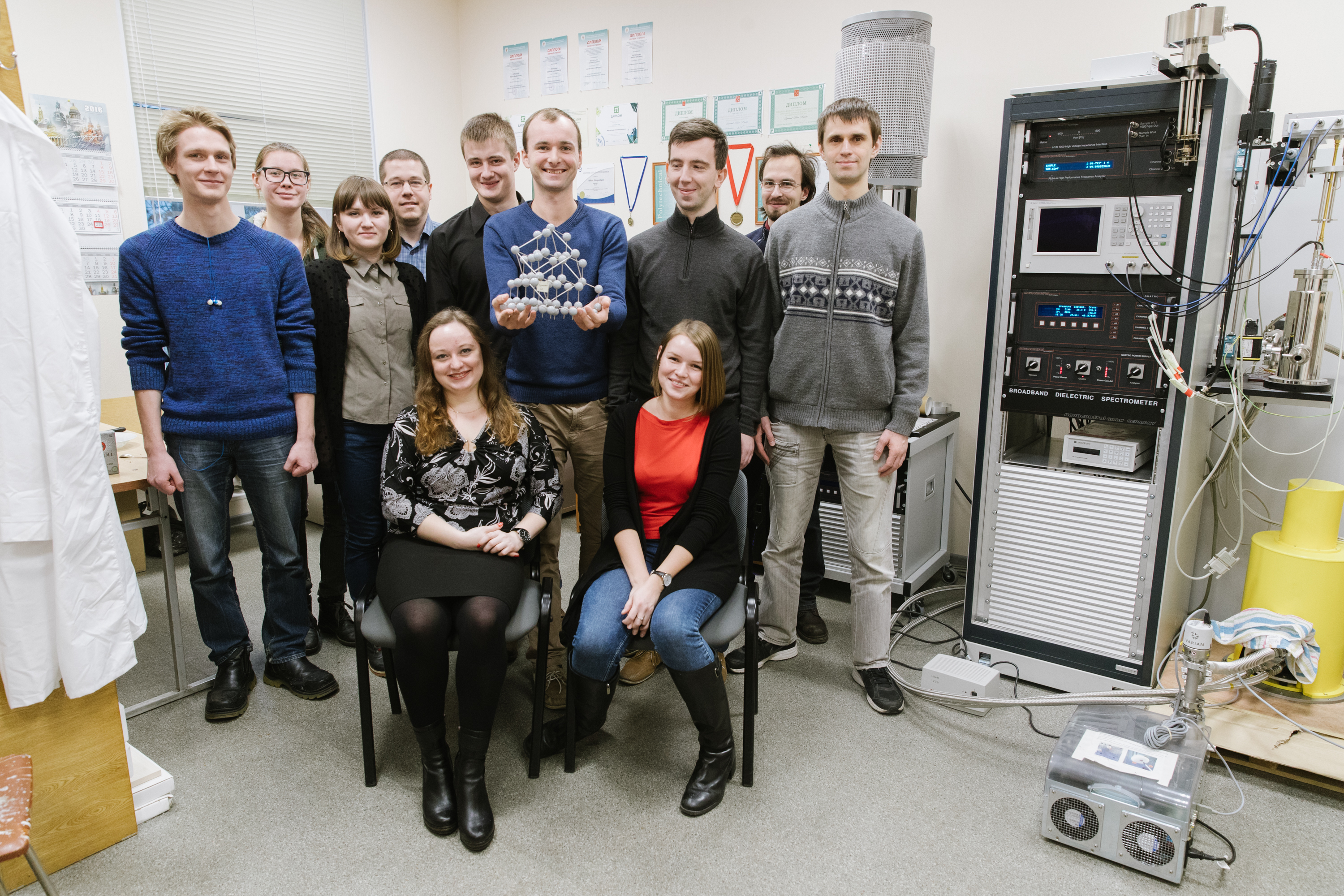
Scientific team:
- Burkovsky Roman Georgievich
- Vakhrushev Sergey Borisovich
- Knyazeva Maria Alexandrovna
- Vanina Polina Yuryevna
- Vakulenko Alexander Feliksovich
- Ganzha Alexander Evgenyevich
- Molokov Anton Yuryevich
- Golosovsky Igor Viktorovich
- Koroleva Ekaterina Yuryevna
- Naberezhnikov Alexander Alekseevich
- Politova Galina Alexandrovna
- Alexeeva Olga Alexandrovna
- Bronvald Yury Alekseevich
- Petrukhno Alexander
- Reimers Serafim Andreevich
- Dayneka Alexey
- Research directions
1. Certification and diagnostics of materials under low temperatures (down to 4 K) and high magnetic fields (up to 9.5 T), including structure studies, including at the mesoscale;
2. Investigation of the dynamics (both phonon and relaxation) of materials and their changes at low temperatures;
3. Investigation of microcrack formation at low temperatures and in high magnetic fields;
4. Investigation of ferroelectric and magnetic domain structures and their temperature evolution;
5. Creation and investigation of self-organized nanostructured materials for electronic engineering;
The main objects are perovskite-like compounds with non-isovalent substitution, in which systems of chemically ordered and polar nanodomains are formed. In such systems, due to the formation of polar nanodomains, it is possible to achieve, in particular, electromechanical energy conversion efficiency an order of magnitude higher than values for spatially homogeneous materials. The laboratory conducts a comprehensive study of such structures using a combination of probe microscopy and neutron and X-ray (synchrotron) scattering techniques.
6. Creation and investigation of artificial nanocomposite structures based on dielectric porous matrices;
In this case, technologies for creating large volumes of nanostructured materials with controlled spatial characteristics are used. Special emphasis is placed on ferroelectric and magnetic nanocomposites. Conducted studies of such materials have made it possible to approach solving a number of important applied problems. Thus, approaches to overcome the superparamagnetic limit have been developed, which can serve as a basis for creating next-generation magnetic information storage media. Analysis of the behavior of order-disorder type ferroelectrics under confined geometry conditions has made it possible to create a highly efficient nanocomposite material for compact capacitors, which is confirmed by RF patent RU 75784 dated 08/20/2008.
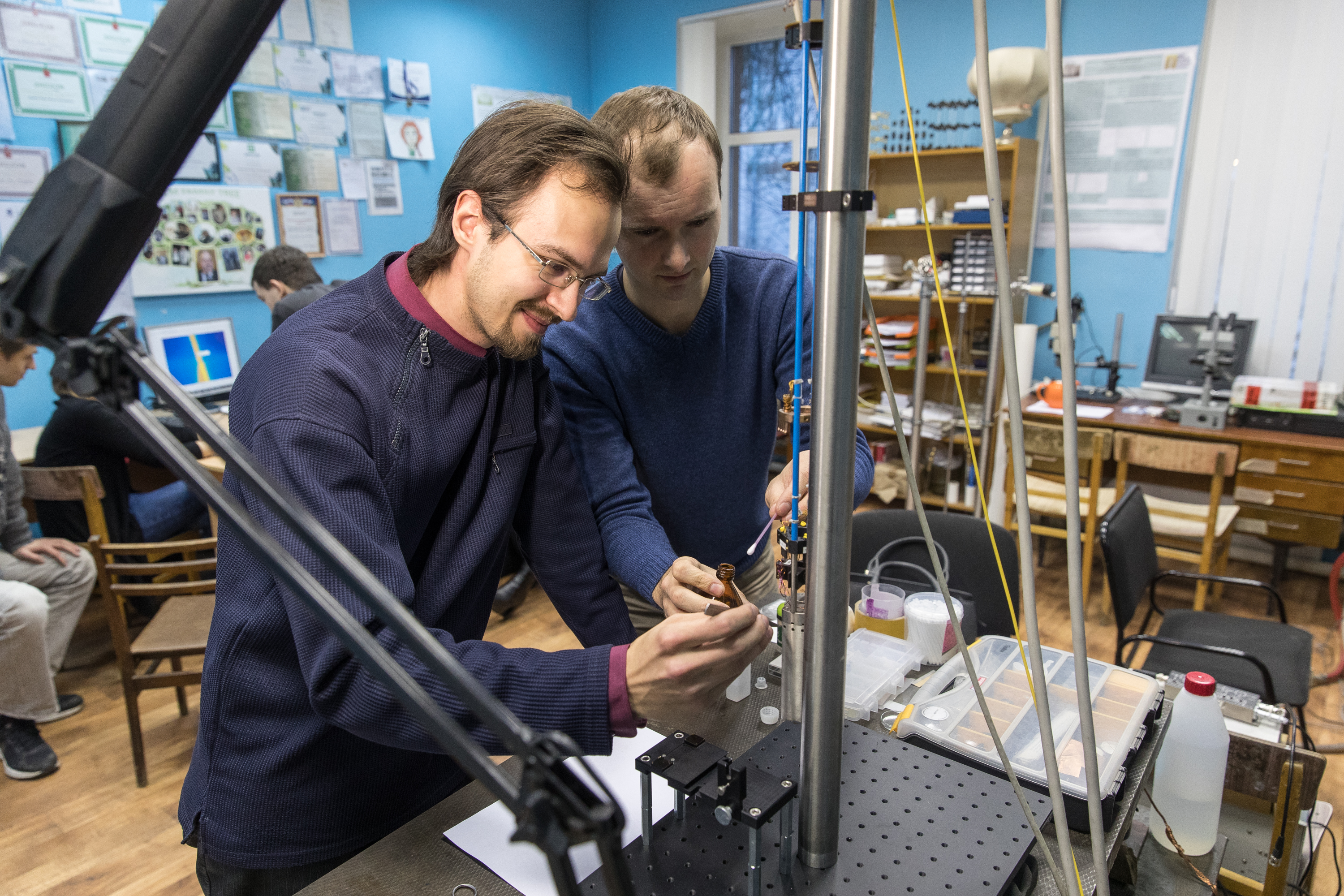
Based on its own experimental facilities, the Research and Education Center has the ability to conduct material studies:
⇒ By impedance spectroscopy methods (conductivity, dielectric response) in the frequency range 10-6 Hz – 109 Hz in the temperature range 3.5 K – 1500 K, including in the temperature range 3.5 K – 300 K in magnetic fields up to 9 T.
⇒ By probe microscopy methods in the temperature range 3.5 K – 300 K in magnetic fields up to 9.5 T.
⇒ By neutron diffraction, X-ray (synchrotron) diffraction (including on the basis of Russian and International Shared-Use Centers) of the crystalline and magnetic structure of materials. - Equipment used
1. Dielectric spectroscopy in a wide frequency range.
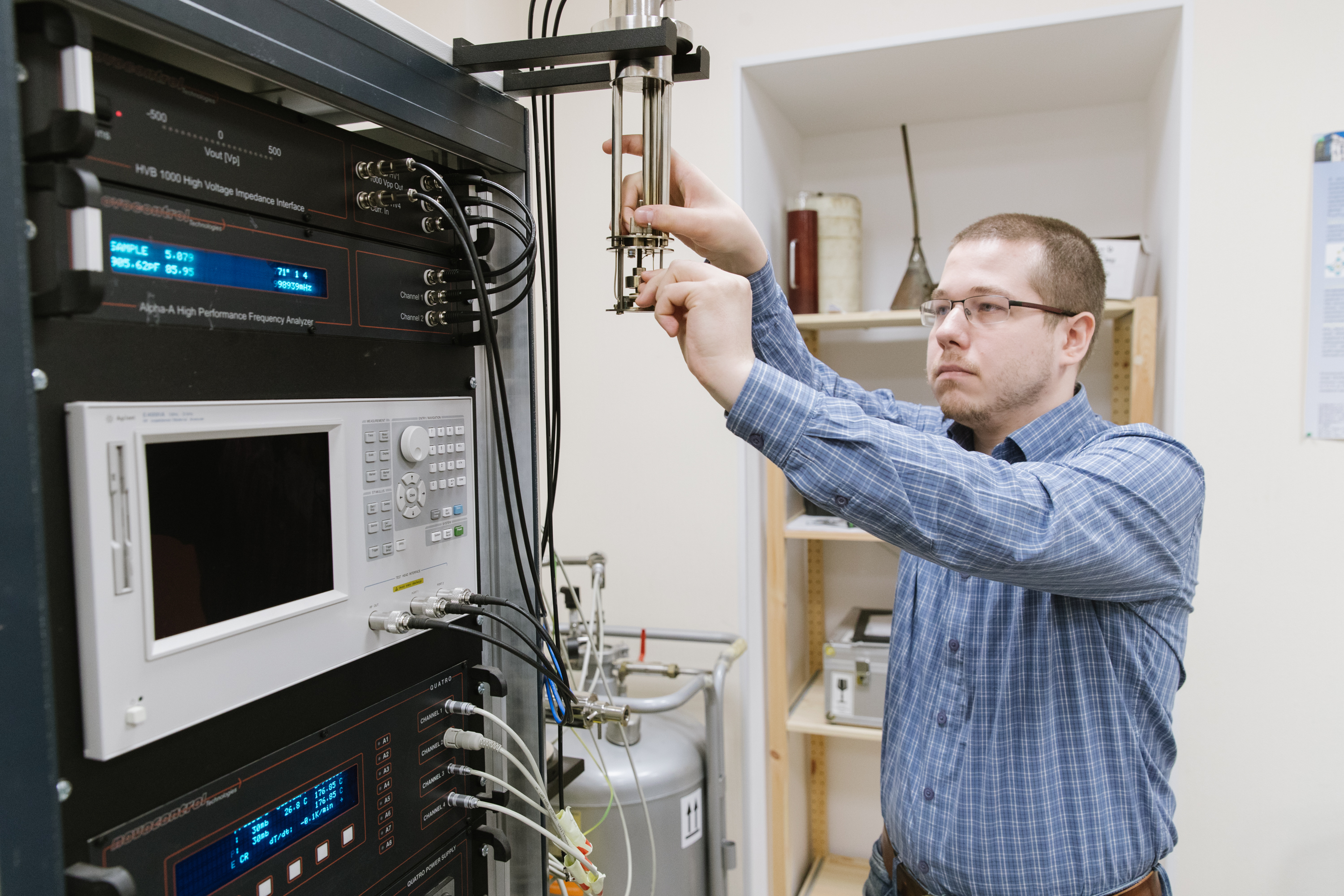
2. Ultra-wideband dielectric spectrometer (10-6 - 109 Hz) with a turnkey broadband system cryosystem NOVOCONTROL CONCEPT 80, temperature range 10K - 1500K.
3. Atomic force microscopy with the ability to operate using magnetic force microscopy, piezoresponse force microscopy techniques, as well as in lateral force mode.
4. attoAFM I - Cryogenic Microscope System integrated system – cryogenic scanning force microscope, autonomous cryostat down to 4K, superconducting magnet up to 9.5 T.
5. Synchrotron radiation scattering. Use of shared-use centers in Russia, Europe and the USA on a competitive basis. Experience using the instrumentation of KISI, APS (USA), ESRF (France), SPring-8 (Japan).
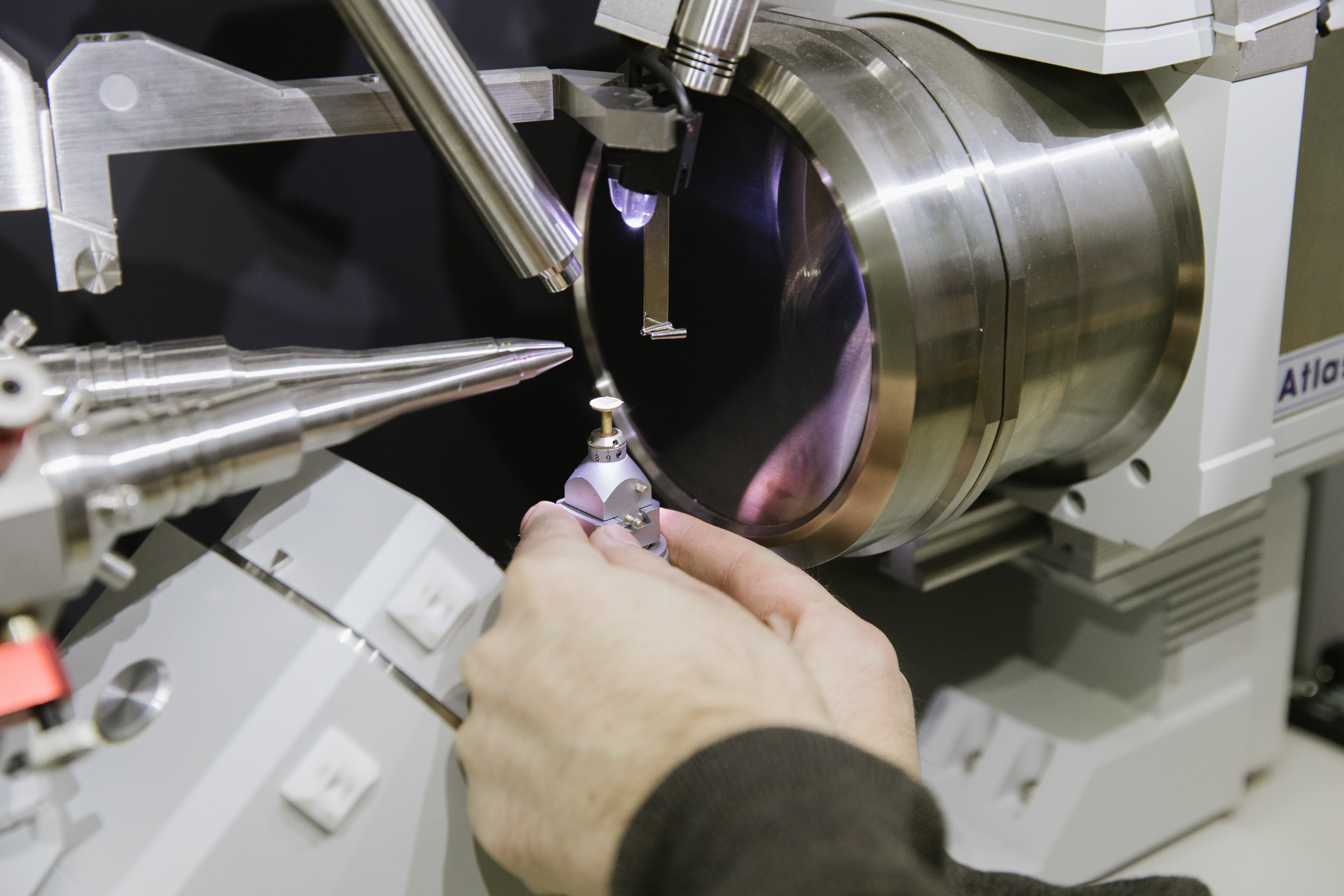
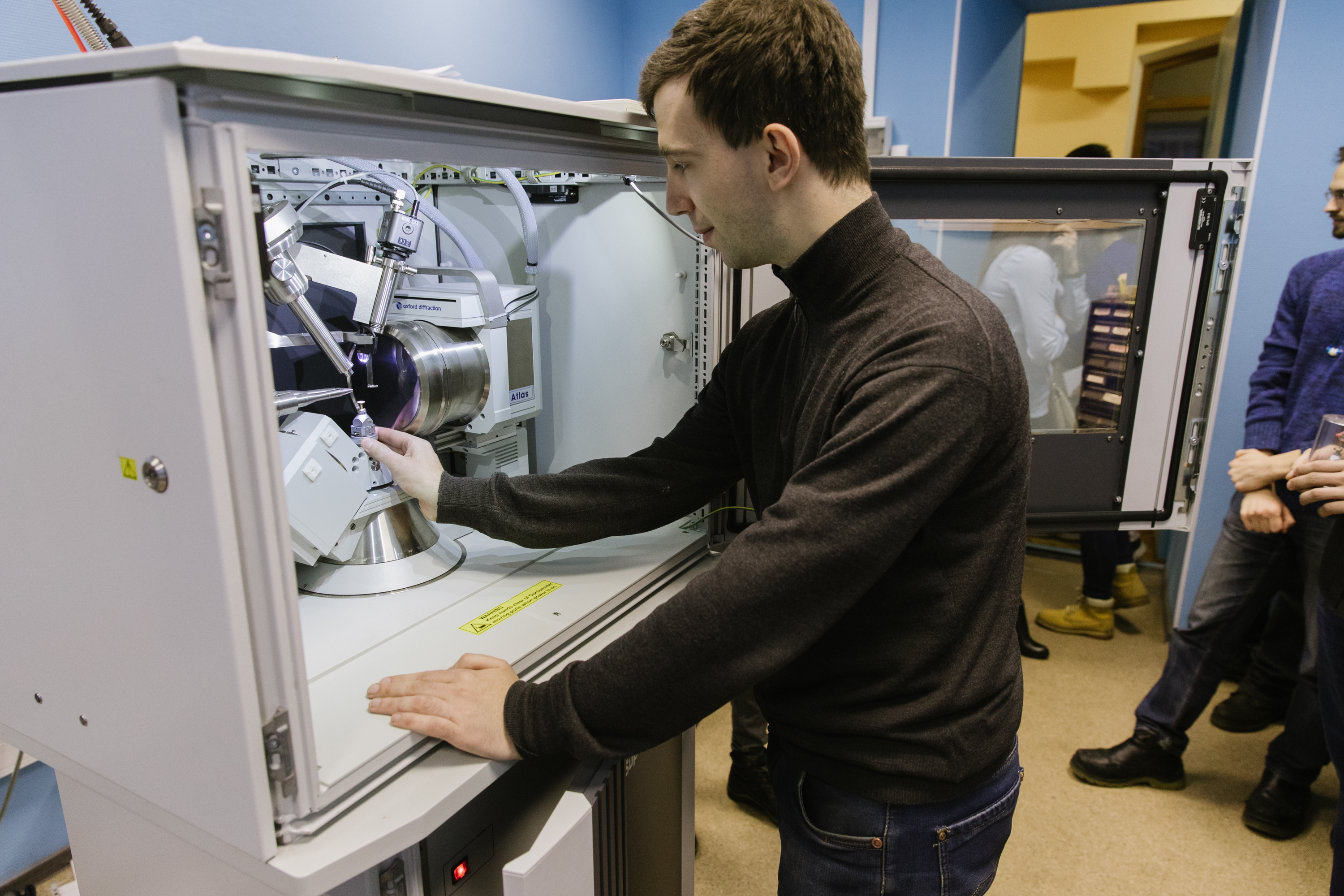
6. SuperNova (Agilent) single-crystal X-ray diffractometer for operation at two wavelengths, using high-intensity radiation sources, with a fast ATLAS position-sensitive detector and Cobra plus and HeliJet attachments, providing measurements in the temperature range 15–500K. (X-ray diffraction).
- Publications
Publications can be viewed by following the links below:
- Achievements
The REC "PNC" was established in 2005 on the basis of the Department of Physical Electronics of the RFF SPbSPU, as a joint project of SPbSPU, Ioffe Physical-Technical Institute of the Russian Academy of Sciences and Konstantinov Petersburg Nuclear Physics Institute (NRC "Kurchatov Institute"). For the period 2006 – 2026, the REC team completed a number of targeted federal projects: 3 RNPWH projects (Rosobrazovanie), 7 Federal Target Program projects, 14 DAAD-Ministry of Education and Science of the Russian Federation projects, 15 regional projects (Government of St. Petersburg), 25 RFBR projects, 1 Megagrant (supervisor – Tagantsev A.K., EPFL (Switzerland)), 17 projects – RSF.
3 patents have been obtained, 3 certificates for registration of computer programs, a diploma from an international exhibition, students and postgraduates have received 11 medals and 18 diplomas, 8 Doctors and 12 Candidates of Physical and Mathematical Sciences have been trained.
To date, SPbPU has entered the pool of users and presented a promising research plan at the SKIF synchrotron workstations (Novosibirsk).
More than 200 scientific papers have been published in the subject area. Citation indices of the main researchers: (Vakhrushev – 3,815 (h=30), Naberezhnikov – 1,420 (h=18); Koroleva – 1,029 (h=14), Filimonov -1,254 (h=16), Burkovsky – 823 (h=12)).
1. Triggered incommensurate transitions have been discovered - transitions in which the incommensurate order parameter is formed not as a result of condensation of an incommensurate soft mode, but due to condensation of a soft mode corresponding to another (second) order parameter. The effect was demonstrated experimentally using PbHfO3 as an example, where the role of the second order parameter is played by antiferrodistortive distortions of the oxygen framework. This is a new type of transition in dielectrics. [Burkovsky et al., Triggered incommensurate transition in PbHfO3, Physical Review B, 100 (1), art. no. 014107 (2019).].
2. The role of dipole-dipole forces in the formation of incommensurate structures in crystals with a cubic perovskite structure has been revealed [Burkovsky, R.G., Dipole-dipole interactions and incommensurate order in perovskite structures, Physical Review B, 97 (18), art. no. 184109 (2018).]
3. The effect of temperature smearing of antiferroelectric transitions and new crystalline structures in PbZrO3/SrRuO3/SrTiO3 epitaxial heterostructures were discovered. Unlike the smearing of ferroelectric transitions, the smearing of antiferroelectric transitions, due to the symmetry of the problem, cannot be reduced to the influence of an internal bias electric field and requires new theoretical approaches [Lityagin et al., Intermediate phase with orthorhombic symmetry displacement patterns in epitaxial PbZrO3 thin films at high temperatures, Ferroelectrics, 533 (1), pp. 26-34. (2018).]
4. A qualitatively new sequence of phase transitions in PbZrO3 antiferroelectric single crystals under high hydrostatic pressure has been identified, including an incommensurate phase formed as a result of critical slowing down of fluctuations of the incommensurate order parameter. The qualitative form of the temperature-pressure phase diagram of this well-studied compound has been revised [Burkovsky et al., Scientific Reports, 7, art. no. 41512 (2017).].
5. In the Tb0.2Dy0.8Co2−Tb0.2Gd0.8Co2 system and in the system with partial substitution of cobalt by aluminum Tb0.2Dy0.8Co1.9Al0.1−Tb0.2Gd0.8Co1.9Al0.1, a magnetic morphotropic phase boundary (MPB) was discovered, in the region of which magnetostrictive properties are enhanced. The Curie temperature does not depend on the external magnetic field strength, while the MPB shifts to the low-temperature region. It was found that in these systems, the maximum values of volume magnetostriction and MCE (in the Curie temperature region) remain constant, while the Gd and Dy concentrations vary. This system of compounds is particularly promising because the operating temperature range (manifestation of maximum effects) of the compounds varies in the range of 250 to 320 K, which is most important for technical use.
6. Features of the surface structure of multicomponent Laves phases were studied using atomic force and magnetic force microscopy. It was established that partial substitution of cobalt by aluminum in Tb,Dy,Ho(Gd)Co2 compounds leads not only to structure dispersion, but also to a change in functional properties, namely, an increase in the Curie temperature and a decrease in the magnetocaloric effect. A connection between magnetic and magnetocaloric properties and the structural features of samples observed at the micro- and nanolevels was revealed.
7. The structure and magnetic properties of the SmFe2 compound and substituted compounds based on it were studied. Using temperature diffraction and tensometry, the temperature boundaries of the existence of the angular phase during the transition from the rhombohedral to the orthorhombic phase in SmFe2 were clarified. It was established that in the multicomponent system Sm0.2(Tb1-хYх)0.8Fe2, rhombohedral structure distortions at room temperature are found in alloys with х = 0 – 0.4, while in the low-temperature region all studied compounds demonstrate spin-reorientation phase transitions. Based on the research results, a magnetic phase diagram was constructed. The behavior of magnetization and magnetostriction in the region of magnetic phase transitions was studied.
- Collaborations
- Baikov Institute of Metallurgy and Materials Science
- Institute of Crystallography
- Amur State University
- Pacific National University
- Belarusian State University;
- Institut Laue – Langevin (ILL). Grenoble, France;
- École Centrale Paris (ECP), Paris, France;
- University of Kiel, Germany;
- Johannes Gutenberg University, Mainz, Germany;
- Hahn-Meitner Institute, Berlin, Germany;
- Spring-8 Synchrotron Research Center, Japan;
- Indian Institute of Technology, Madras, India;
- University of Venda, South Africa;
- Shanghai University (ECNU), China;
- Kathmandu University, Nepal;
- Stanford University, USA;
- Oak Ridge National Laboratory (ORNL), Tennessee, USA.